Flute Practice Tips: Work Smarter, Play Better
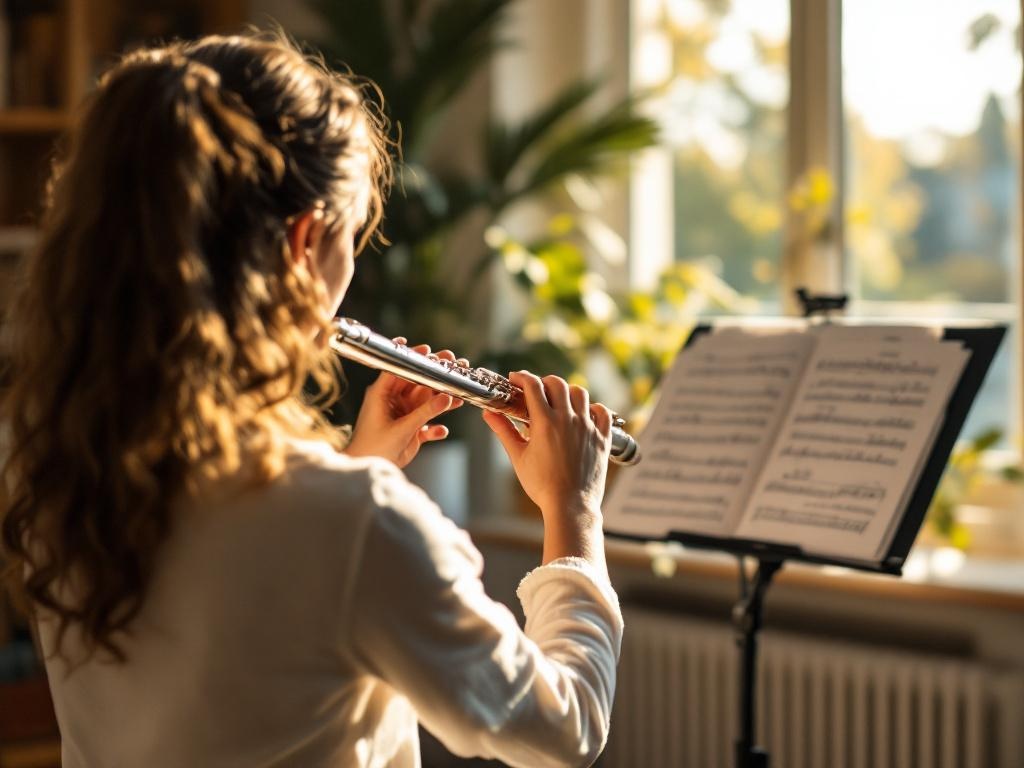
There is a particular kind of frustration that every flute student recognizes, because almost every flute student has lived it. You practiced all week. You sat down with your instrument, you played through your pieces, you logged what felt like real time, and you walked into your lesson hoping to hear something encouraging — and instead your teacher zeroed in immediately on the same passages that gave you trouble on Tuesday, and you cannot understand why the hours you spent did not translate into the progress you expected. If that feeling is familiar, I want you to hear this clearly: it is almost never about talent, and it is almost never about the total number of hours. It is about what you were doing during those hours and whether it was actually teaching your body what you wanted it to learn.
The most important shift you can make in your practice is deceptively simple in theory and requires genuine discipline to execute consistently. Stop practicing pieces from start to finish and start practicing with specific, measurable goals. Not "practice my Andersen etude." That is a direction, not a destination. Instead, decide before you pick up your flute what success looks like for this session. Something like "play the first eight bars of the Andersen etude at sixty beats per minute with clear articulation and no wavering on the sustained high D" is a goal. Write it down. The act of specifying what you are trying to accomplish creates a filter that forces honest self-evaluation when the session ends. Did you achieve it? If yes, you know exactly what to move on to. If no, you know exactly what to come back to tomorrow. Without that specificity, it is remarkably easy to spend forty-five minutes playing through pieces and convince yourself afterward that it was productive work. With it, you have real data about your progress.
Your warm-up is not optional preparation for the real practice. It is the first phase of every practice session, and skipping it because you are short on time is one of the most common and most costly mistakes students make. Here is why. Your embouchure muscles, your diaphragm, your finger mechanism — none of them are ready for demanding work without a gentle, progressive warm-up. When you skip the warm-up and go straight into repertoire, you are practicing on a cold, tense mechanism, which means the muscle memory you are building has tension and compensation built into its foundation. Five to ten minutes of long tones to center your embouchure, a slow major scale to activate your fingers and ears, and a gentle articulation exercise to prepare your tongue — this is not padding before the real work begins. It is the real work beginning correctly, and the few minutes it costs you will save you hours of correcting ingrained habits later.
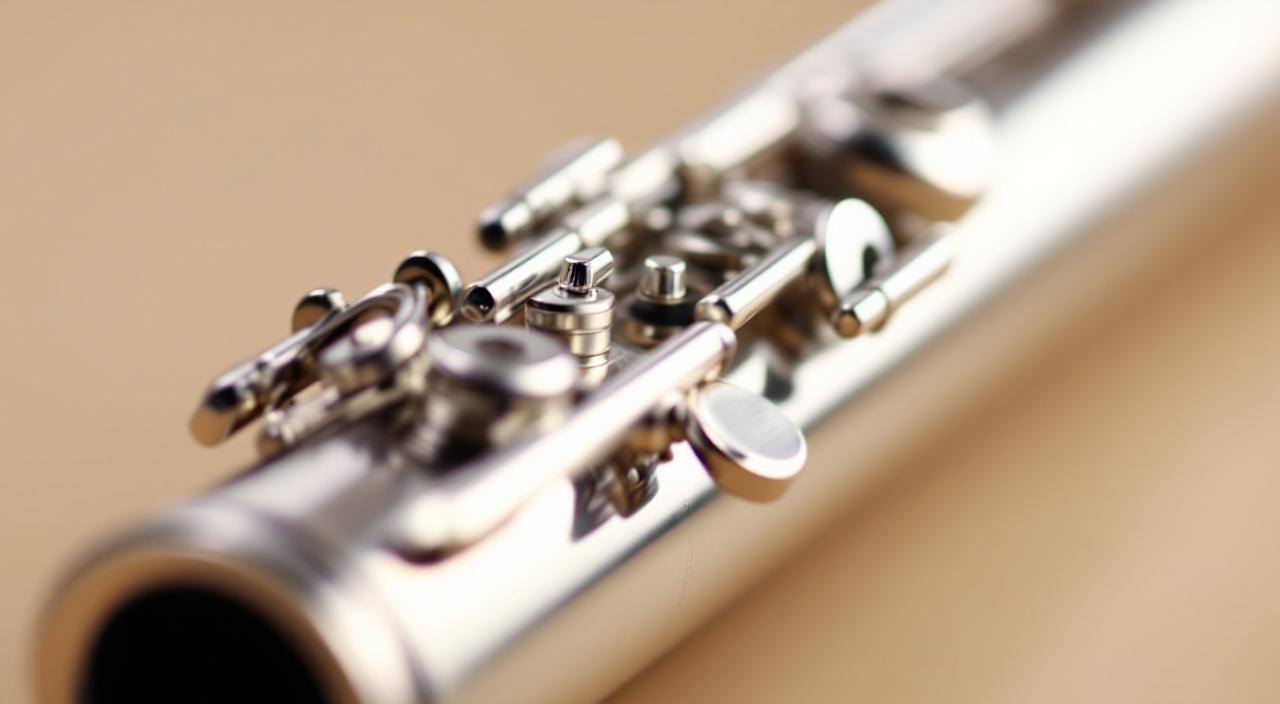
Once you are warmed up and you have your goal in mind, here is the technique that has rescued more struggling passages than almost anything else in music education. Take any passage that is giving you trouble — two to three bars, nothing larger — and practice it at twenty-five percent of the tempo where you ultimately need it to be. I mean genuinely slowly, to the point where playing it incorrectly would require more effort than playing it correctly. The goal is to make mistakes structurally impossible, so that the muscle memory you are building is accurate muscle memory from the very first repetition. Once the passage is clean and accurate at that speed, increase by five beats per minute and repeat. Only increase again when it is error-free at the current speed. This is sometimes called the slow-motion drill, and what it builds is precision that becomes the foundation for speed. Speed without accuracy is just fast errors, and fast errors take far, far longer to correct than the slow foundational work ever required to build them correctly the first time.
While you are practicing, do something most students resist because it feels strange and self-conscious at first. Use a mirror. Set yourself up so you can see your face and body while you play, and spend two minutes simply watching. Notice whether your shoulders are creeping up toward your ears, carrying tension down into your arms and hands. Notice whether your jaw is clenched or your embouchure distorted by tension you are completely unaware of. Notice whether your breathing is shallow and chest-based or deep and supported from your lower abdomen. We are remarkably skilled at ignoring our own bodies while our attention is focused on producing sound, which means we routinely practice tension and poor alignment without realizing it. The mirror check catches these habits before they become ingrained, which makes it one of the highest-value self-corrections available to any developing player at any level.
One tool that consistently produces transformative results but that most students avoid is the self-recording audit. Once a week, record two minutes of your practice. A phone propped against a stack of books on a music stand will do the job. Then, later the same day or the next morning, listen back with your actual music in front of you and write down three specific things you noticed that you did not hear while you were playing. In the moment of playing, your ears are occupied with the job of controlling what you are doing rather than observing what you are producing. When you listen back with distance, you hear your playing the way others hear it. You hear pitch drift that you did not feel. You hear a consistent hesitation before a particular fingering change. You hear the register where your tone thins out or goes bright in a way that undermines an otherwise solid phrase. These are the things that show up in juries and auditions and performances, and you cannot fix what you cannot clearly hear. The self-recording audit gives you a perspective on your own playing that you cannot access any other way, and the students who use it consistently report that it changes not just what they hear but what they listen for while they are playing.
Close every practice session — even the short ones, even the imperfect ones — by playing something you already play well. This is not a reward for getting through the hard work. It is a deliberate strategy for building a sustainable relationship with your practice. When you end on a confident, successful note, your nervous system registers that accomplishment as something worth returning to. And please, resist comparing your progress to other students. Every musician develops at their own pace, for reasons that have nothing to do with talent, and measuring yourself against someone else's timeline is a race with no meaningful finish line. Track your own improvement against your own baseline. That is the only measurement that tells you whether you are genuinely moving forward.
The students who grow into strong, confident flutists are rarely the ones with the most natural talent. They are the ones who showed up deliberately, who built specific habits instead of accidental ones, and who trusted that small, consistent, focused efforts compound over time into genuine mastery. You do not need more hours than you have. You need a specific goal before each session, a warm-up that prepares your body, a metronome that keeps your rhythm honest, a mirror that shows you what your body is actually doing, and the willingness to be a little uncomfortable in the short term while your playing grows into something you can be genuinely proud of in the long term. The fundamentals are not glamorous. They are what works. Show up, warm up, and trust the process. Your future self playing music that moves people is worth every minute you invest in them today.
Comments
Post a Comment