Posts

Showing posts from May, 2026

Why Your Articulation Feels Clumsy (And the Daily Practice That Fixes It)

Image
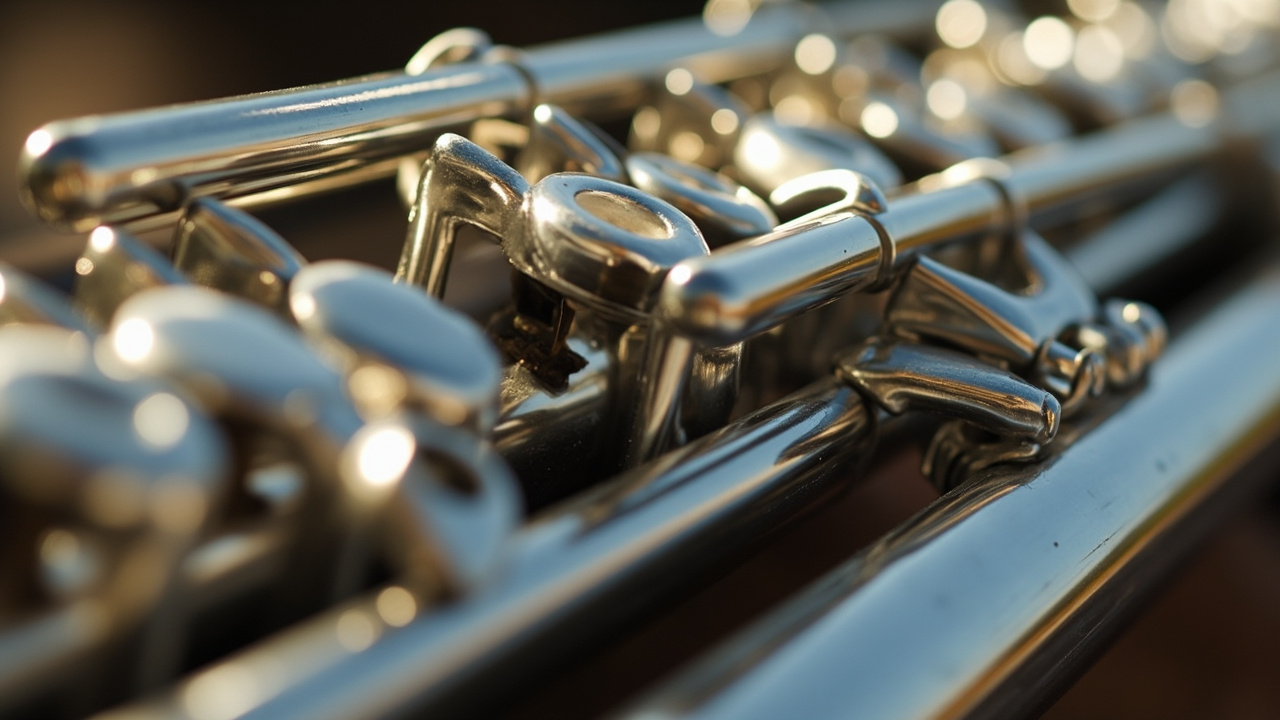
Articulation is one of those skills that looks effortless when done well and sounds painfully obvious when it is not. A clean, crisp note attack separates music from noise, and yet for most flutists, developing that clean attack takes longer than almost any other technical skill. The good news is that articulation, like everything else on the flute, improves with focused, patient practice, and once you understand what your tongue is actually supposed to do, you can begin to train it deliberately. The tongue serves as a valve that briefly interrupts your airstream to separate one note from the next. Think of it like a gentle gate that swings open and closed, momentarily pausing the flow of air before letting it continue uninterrupted to the next pitch. The goal is a quick, clean stroke that does not disturb your embouchure position or disrupt the air column beneath it. When your tongue stroke is working correctly, the listener hears not a percussive pop but a clear, intentional beginni...

The Practice Habit That Actually Moves Your Playing Forward

Image
There is a difference between playing your flute and practicing it. Most students do plenty of the former and not enough of the latter. Playing means working through music you already know, running passages that come easily, gravitating toward what feels good and avoiding what does not. Practicing means something different. It means deliberately working on specific aspects of your playing with clear goals, even when those aspects are difficult, even when the process is not fun, and even when you would rather just play through some beautiful melodies and call it a day. That distinction is where progress lives. The single most important thing about practice is consistency. Ten or fifteen focused minutes every single day will serve you far better than two hours once a weekend. Your brain and your muscles need regular, repeated stimulation to build the neural pathways that become technique. A little each day keeps those pathways strong and accessible. A big session once a week followed by...

Your First Baroque Sonata: A Beginner's Guide to Where to Start and Why It Will Change Your Playing

The first time I opened a Baroque sonata, I fully expected it to be easier than the Romantic music I had been studying. The notation looked deceptively simple—just quarter notes and eighth notes, no dynamics, no articulation markings telling me how to shape anything. There was nothing to tell me where to breathe, how to phrase, or what ornaments to add. I assumed it would be a relief. I was completely wrong. That first encounter taught me one of the most important lessons I would ever learn as a musician: music that looks simple is often the hardest to perform well, precisely because it demands so much from you as an interpreter rather than spelling everything out on the page. Baroque sonatas give you a skeleton and expect you to provide the soul. Learning to do that is one of the most transformative things you can do for your development as a flutist, and it all starts with knowing where to begin. Understanding what Baroque sonatas actually demand of you Baroque flute sonatas are th...

Breath Support Exercises That Changed Everything About My Playing

The first time my teacher told me my tone was "breathy" and "unfocused," I was confused. I was blowing air across the hole just like she showed me. What was I doing wrong? The answer, I would eventually learn, had nothing to do with my lips or my fingers. It had everything to do with what was happening below my ribs. Breath support was the missing piece, and once I understood how to develop it intentionally, everything about my playing shifted. Understanding why breath support matters Here is something most students do not realize until someone tells them: your flute produces no sound on its own. Every single note you play is simply air set into motion by your lungs. The instrument is just a pathway. What comes out of your mouth depends entirely on what you send through it. This is why two flutists playing the same instrument can sound completely different—one full and resonant, the other thin and wavering. The difference is almost always breath support. When you...

The Art of Flute Articulation: How to Make Every Note Sing

There is a moment every flutist eventually encounters. You have practiced a passage until your fingers know it by heart, your reading is clean, and your tone is acceptable — yet something still feels off. The notes seem to exist side by side without truly connecting. They don't breathe together. They don't speak. The music sounds competent at best and mechanical at worst. If this has happened to you, the culprit is almost certainly articulation. Articulation is one of those words that sounds technical and intimidating, so many students assume it belongs only in advanced settings or competition prep. In reality, articulation is the moment-to-moment decisions you make about how every single note begins, continues, and ends. It is the difference between a reader who mouths words aloud and one who actually speaks with meaning. Without it, even the most technically gifted flutist sounds generic, unable to convey what a composer intended or to connect genuinely with a listener. The...

Breath Support for Flute Beginners: The Foundation Everything Else Builds On

Image
Every sound you make on the flute begins with air, and the quality of that sound is only as good as the support behind it. Breath support is not a vague concept or a nice-to-have skill. It is the literal engine of the instrument, the thing that makes everything else possible. Without solid breath support, even the most disciplined embouchure and finger work produces a thin, unsteady, unsupported tone that lacks resonance and fails to project. The good news is that breath support is a trainable skill, and starting that training early gives you a massive advantage over students who treat breathing as something that just happens on its own. Flute breath support requires active engagement of the diaphragm and core muscles to create a steady, controlled column of air flowing consistently across the embouchure hole. This is fundamentally different from the passive breathing you do throughout the day. Your diaphragm acts as a piston pushing air upward, and your abdominal muscles provide sust...